Summer is here in the mountains, and with that comes long days, backyard BBQs and campfires, and long weekends camping throughout the state. It's a time of year many look forward to and take full advantage of. Unfortunately, with the warmer weather and increased visitation into the mountains, the dangers of fires greatly increases. Local fire departments and county restrictions aid in the reduction of the chance of these fires. However, knowing what restrictions and permits are in place or needed, or even where to find the information can be confusing and frustrating. While it can be daunting, hopefully we can clear up some of the misinformation and frustration of learning how you can also help lower the risk of fires.
The main piece of knowledge everyone should be aware of is the Summit County restrictions on fire and what each mean. Presently, at the time of this article, Summit County is in a Stage 2 Fire Ban beginning Friday, June 26, 2026..
As stated on the Summit County website,
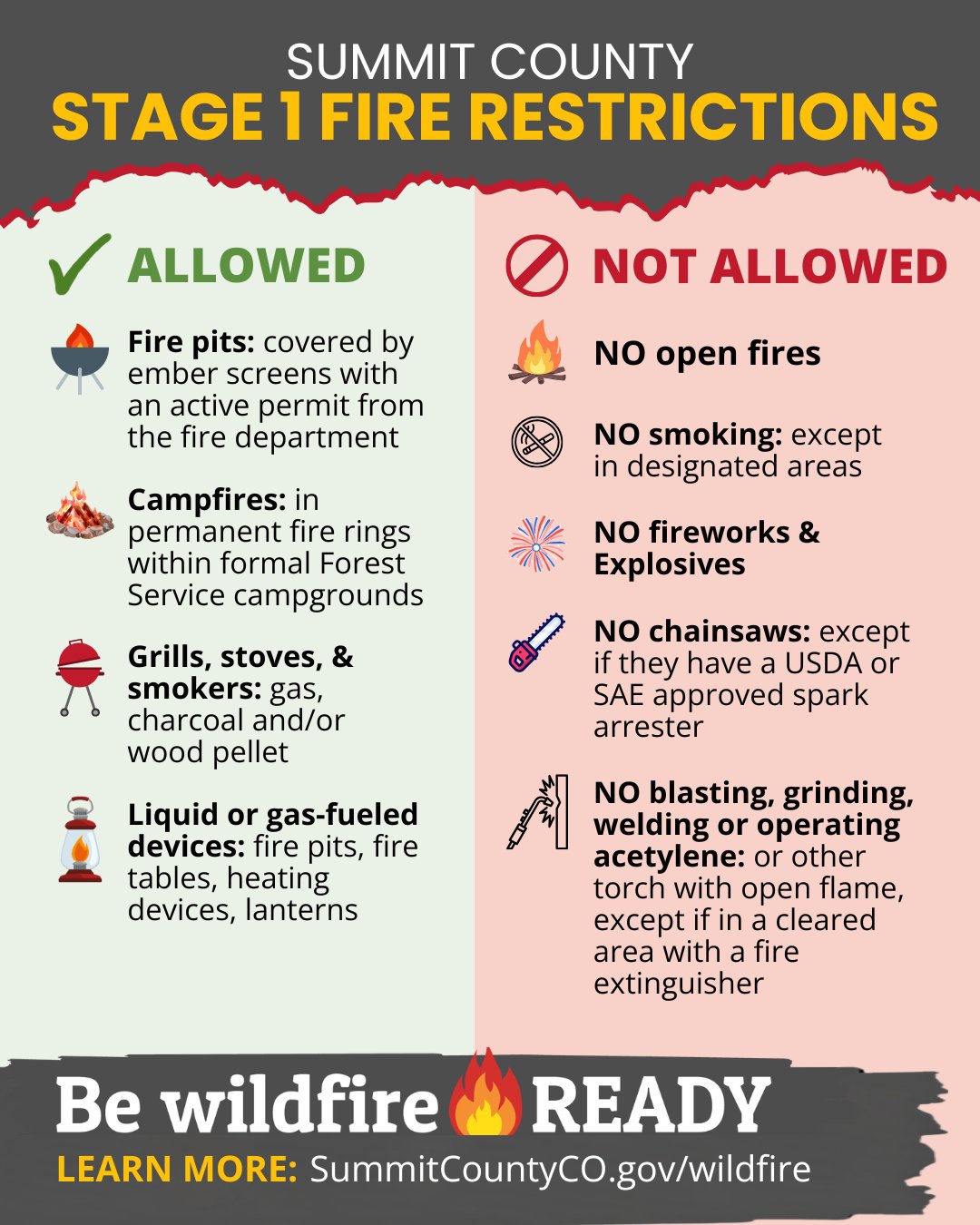
"Stage 1 fire restrictions prohibit building, maintaining, attending or using an open fire. An open fire is defined as any outdoor fire, including but not limited to campfires, warming fires, bonfires or controlled burns of any material. The following activities are also prohibited under Stage 1 fire restrictions:
- Use and/or sale of fireworks
- Use of tracer ammunition
- Use of any projectile containing explosive material, incendiary material or other flammable chemical substance
- Use of recreational explosives, including explosive targets
- Disposal of any burning object outdoors, including any cigarette, cigar or match"
The Stage 1 Fire Ban is the first in the process of restricting use of some of the most common things that cause fires. Depending on the year, and the severity of the hot weather, the county can implement additional restrictions, elevating from Stage 1, to Stage 2 Fire Restrictions. The county website describes these as,
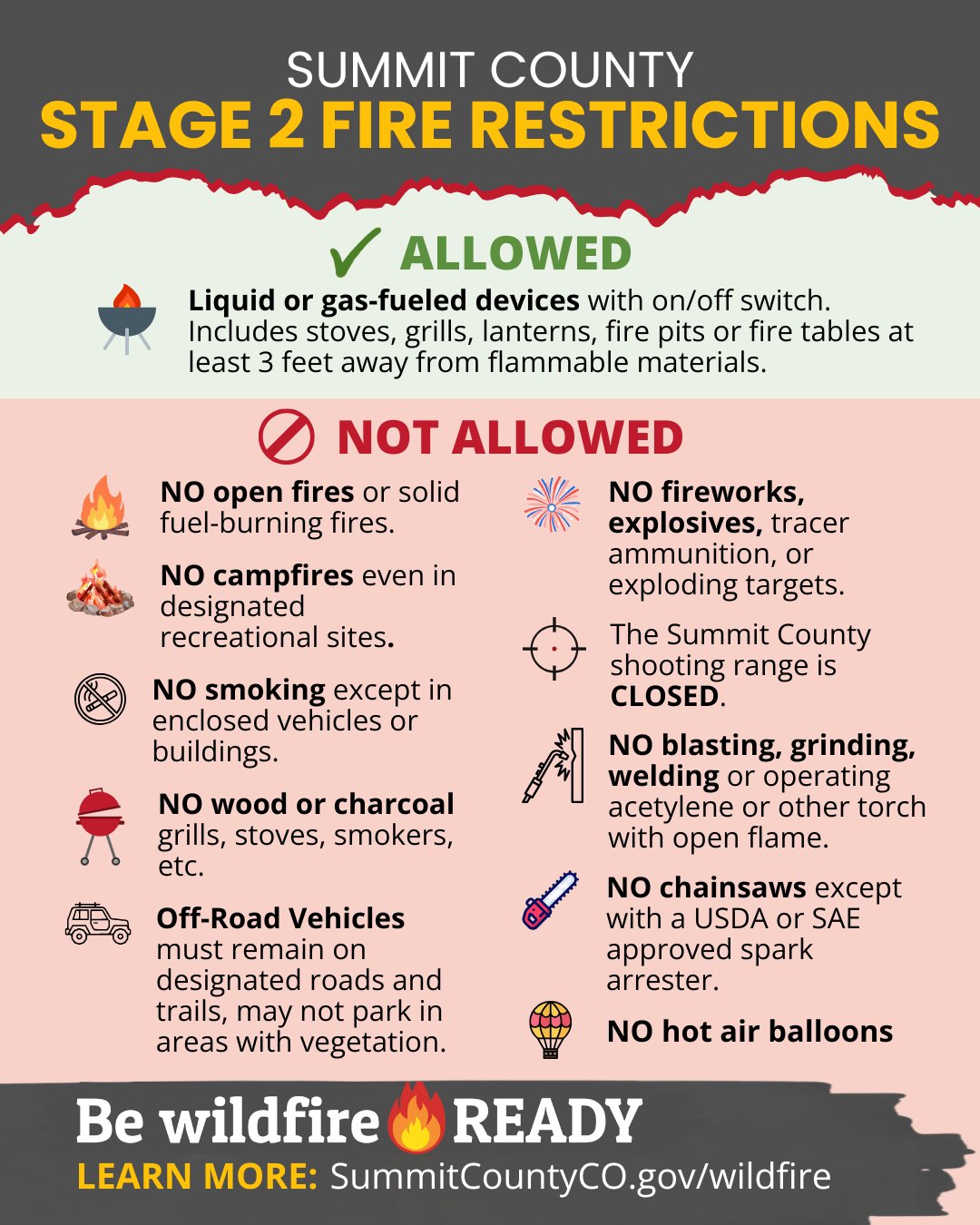
"Stage 2 fire restrictions are a total ban on outdoor fires and other activities. All things fire are pretty much banned, seriously.
- NO fires, bonfires, operating chainsaws, charcoal grills, chimenea portable outdoor fireplaces, fire pits, fireworks, shooting, sky lanterns, tiki torches, burning trash, welding, and torches.
- The shooting range is CLOSED.
- Prohibitions are also in effect for private residences."
The county has made it simple to understand both, along with keeping the county updated with what restrictions are in place. Finding this, along with other resources, such as restrictions in neighboring counties, signing up for emergency alerts, and evacuation recourses can be found at https://www.summitcountyco.gov/services/community_development/csu_extension/forest_health/fire_restrictions.php
Simple, easy to read graphics are also available, and shown below.
Next, for homeowners within Summit County, the local fire department, Summit Fire & EMS and Red White & Blue Fire, have begun offering Courtesy Wildfire Assessments as a free service to help reduce exposure to your home should a fire start. A representative from either department will come to your home, walk the property with you, and then complete an assessment of your home and what surrounding hazards your property may have. A report is then sent to you with recommendations on how to reduce these hazards. Some even use these reports to submit to their insurance company as proof of what changes they have made to make their home even safer from fire.
Finally, Summit County implemented a permitting process for those wanting to use a backyard fire pit. Those wanting to properly have outdoor fires on their property must meet criteria to receive these permits, which include a cleared area of no flammable materials, a wire mesh cover, and easily accessible water source should you need to put it out. The county has relied on the fire departments to inspect for these through the Community Connect Portal. Depending on which area you live in the county, the links to this portal are below:
Summit Fire & EMS Backyard Fire Permit Application